The Japan Times - Soviet-era outpost helps Russia retain a foot in Norwegian Arctic

EUR -
AED 4.313468
AFN 77.598705
ALL 96.698386
AMD 447.792527
ANG 2.102883
AOA 1077.044807
ARS 1692.205144
AUD 1.764354
AWG 2.114155
AZN 2.001365
BAM 1.955767
BBD 2.361861
BDT 143.307608
BGN 1.957508
BHD 0.442093
BIF 3466.042156
BMD 1.17453
BND 1.514475
BOB 8.102865
BRL 6.365607
BSD 1.17268
BTN 106.04923
BWP 15.537741
BYN 3.457042
BYR 23020.795811
BZD 2.358461
CAD 1.618445
CDF 2630.948518
CHF 0.934916
CLF 0.027253
CLP 1069.11676
CNY 8.28573
CNH 8.284609
COP 4466.125466
CRC 586.590211
CUC 1.17453
CUP 31.125056
CVE 110.26316
CZK 24.276491
DJF 208.826515
DKK 7.472132
DOP 74.548756
DZD 152.289758
EGP 55.571073
ERN 17.617956
ETB 183.229742
FJD 2.668303
FKP 0.879936
GBP 0.878351
GEL 3.175767
GGP 0.879936
GHS 13.461775
GIP 0.879936
GMD 85.741137
GNF 10198.829794
GTQ 8.98185
GYD 245.335906
HKD 9.138141
HNL 30.873485
HRK 7.537789
HTG 153.707435
HUF 385.234681
IDR 19536.845016
ILS 3.785271
IMP 0.879936
INR 106.37734
IQD 1536.174363
IRR 49474.161194
ISK 148.465122
JEP 0.879936
JMD 187.756867
JOD 0.832789
JPY 182.950774
KES 151.217476
KGS 102.713135
KHR 4694.921647
KMF 492.719958
KPW 1057.060817
KRW 1731.880759
KWD 0.360233
KYD 0.977284
KZT 611.589793
LAK 25422.575728
LBP 105012.44747
LKR 362.353953
LRD 206.976546
LSL 19.78457
LTL 3.468083
LVL 0.710462
LYD 6.369894
MAD 10.78842
MDL 19.823669
MGA 5194.913303
MKD 61.548973
MMK 2466.385496
MNT 4167.553805
MOP 9.403343
MRU 46.930217
MUR 53.93488
MVR 18.092159
MWK 2033.466064
MXN 21.157878
MYR 4.812408
MZN 75.064681
NAD 19.78457
NGN 1706.088063
NIO 43.15928
NOK 11.906572
NPR 169.679168
NZD 2.023657
OMR 0.451612
PAB 1.17268
PEN 3.948134
PGK 5.054916
PHP 69.43241
PKR 328.640215
PLN 4.225315
PYG 7876.868545
QAR 4.273829
RON 5.092651
RSD 117.378041
RUB 93.579038
RWF 1706.771516
SAR 4.407079
SBD 9.603843
SCR 17.649713
SDG 706.484352
SEK 10.887784
SGD 1.517615
SHP 0.881202
SLE 28.335591
SLL 24629.319496
SOS 668.988835
SRD 45.275842
STD 24310.407882
STN 24.499591
SVC 10.260829
SYP 12986.886804
SZL 19.77767
THB 37.109332
TJS 10.77682
TMT 4.122602
TND 3.428143
TOP 2.827988
TRY 50.011936
TTD 7.957867
TWD 36.804032
TZS 2902.351563
UAH 49.548473
UGX 4167.930442
USD 1.17453
UYU 46.019232
UZS 14127.764225
VES 314.116117
VND 30897.196663
VUV 142.580188
WST 3.259869
XAF 655.946053
XAG 0.018958
XAU 0.000273
XCD 3.174228
XCG 2.113465
XDR 0.815786
XOF 655.946053
XPF 119.331742
YER 280.129715
ZAR 19.820741
ZMK 10572.187233
ZMW 27.059548
ZWL 378.198309
  • SCS

    0.0200

    16.14

    +0.12%

  • BCC

    0.2500

    76.51

    +0.33%

  • NGG

    0.2400

    74.93

    +0.32%

  • GSK

    -0.0700

    48.81

    -0.14%

  • JRI

    -0.0200

    13.7

    -0.15%

  • BCE

    0.3100

    23.71

    +1.31%

  • AZN

    -0.4600

    89.83

    -0.51%

  • BTI

    -1.2700

    57.1

    -2.22%

  • CMSD

    -0.1500

    23.25

    -0.65%

  • RBGPF

    0.0000

    81.17

    0%

  • RIO

    -1.0800

    75.66

    -1.43%

  • CMSC

    -0.1300

    23.3

    -0.56%

  • BP

    -0.2700

    35.26

    -0.77%

  • RELX

    0.1000

    40.38

    +0.25%

  • RYCEF

    -0.2500

    14.6

    -1.71%

  • VOD

    0.0500

    12.59

    +0.4%

Soviet-era outpost helps Russia retain a foot in Norwegian Arctic


Soviet-era outpost helps Russia retain a foot in Norwegian Arctic

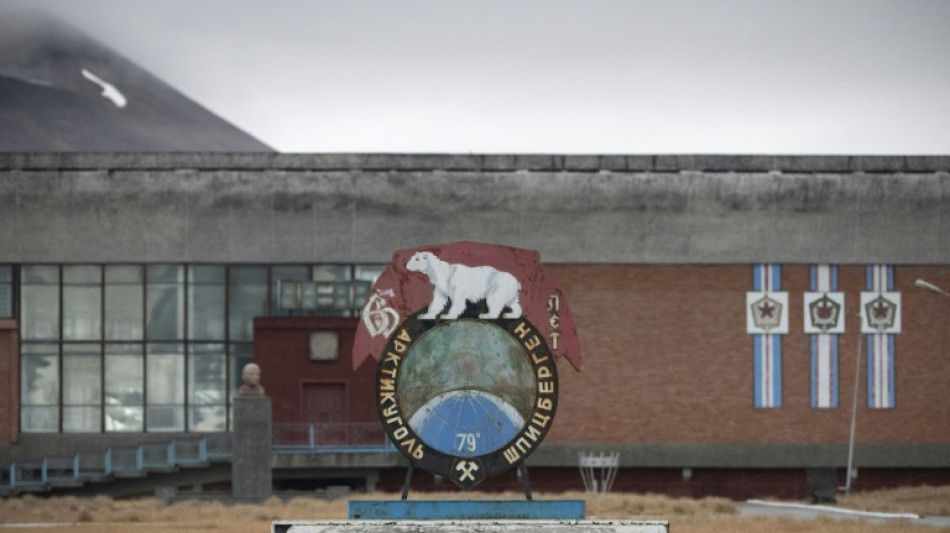
With its bust of Lenin, cultural centre and KGB offices, the abandoned Soviet outpost of Pyramiden may seem like a time-warped Arctic oddity but is valued by Moscow as it vies for clout in the warming region.

Text size:

Russia has made the development of the Arctic a strategic priority, pinning its hopes for supremacy in the region on a fleet of giant nuclear-powered icebreakers.

The tiny ex-mining settlement of Pyramiden, meanwhile, helps Moscow retain a footprint in Norway's Svalbard archipelago, high above the Arctic Circle.

Norway -- a NATO member -- was afforded sovereignty of Svalbard under the 1920 Treaty of Paris but all signatories, which included the Soviet Union, were given equal rights to explore and exploit its mineral resources.

Russia began coal mining in Barentsburg, another settlement in the archipelago, in 1931, and later in Pyramiden, where the Russian community grew to up to 1,200 between 1960 and 1980.

Being sent to Pyramiden was considered a plum job for a miner, a tour guide told AFP.

On the Western side of the Iron Curtain, it provided a window on Soviet power, culture and self-sufficiency, from pig breeding to its 300-seat cinema, swimming pool, gymnasium and hospital.

But as the Soviet Union fell apart, while mining continued in Barentsburg, it stopped in Pyramiden in 1998 as its performance dwindled, and the miners left.

- 'Interesting future?' -

At first sight, Pyramiden now looks like a ghost town.

No one lives there apart from a handful of Russians who run a hotel -- and the polar bears with whom visitors risk coming face-to-face.

But even though the mining community has long gone, nothing has been destroyed, an AFP photographer saw, and its vestiges offer a glimpse into the heyday of the Soviet era.

Buildings built to last are just weather-beaten from decades of harsh winters.

The rails of the funicular on which the trailers of coal were hauled down are still visible on the pyramid-shaped mountain, which gave the village its name.

Inside the buildings, it's as if time has stood still, with the occupants having left suddenly but expected back at any moment.

Phials of ore are lined up in display cabinets in administrative offices, where calendars still hang on the walls, while the KGB premises have reinforced doors and miners' files spread out on the tables.

Classrooms are adorned with children's drawings and the teacher's cup is still there.

But Yury Ugryumov, of the Arctic and Antarctic Research Institute based in Saint Petersburg, said Pyramiden was not just a place of historical memory.

"This village is not abandoned, it has been temporarily put on hold," he told AFP.

Russia is currently developing tourism and research in Pyramiden, drawing glaciologists, hydrologists and marine experts there for scientific work.

"There's hopes for an interesting future here," said Ugryumov, who heads the Russian Arctic expedition to the archipelago.

M.Ito--JT